


Carbon
We use only high-quality and highly enriched anthracite with a low content of sulfur and volatile matter.
High-carbon additive For steel production and casting Carburizer / Recarburizer
Designed for carburizing cast iron and steel Carbon-containing materials for foaming slags
Hydroanthracite is used for:
- as a filtrant for the preparation of drinking and industrial water;
- for water purification in reverse cycles of metallurgical enterprises;
- for the treatment of wastewater contaminated with oil products;
- for water treatment at thermal power enterprises;
- for the purification of biologically treated urban wastewater.
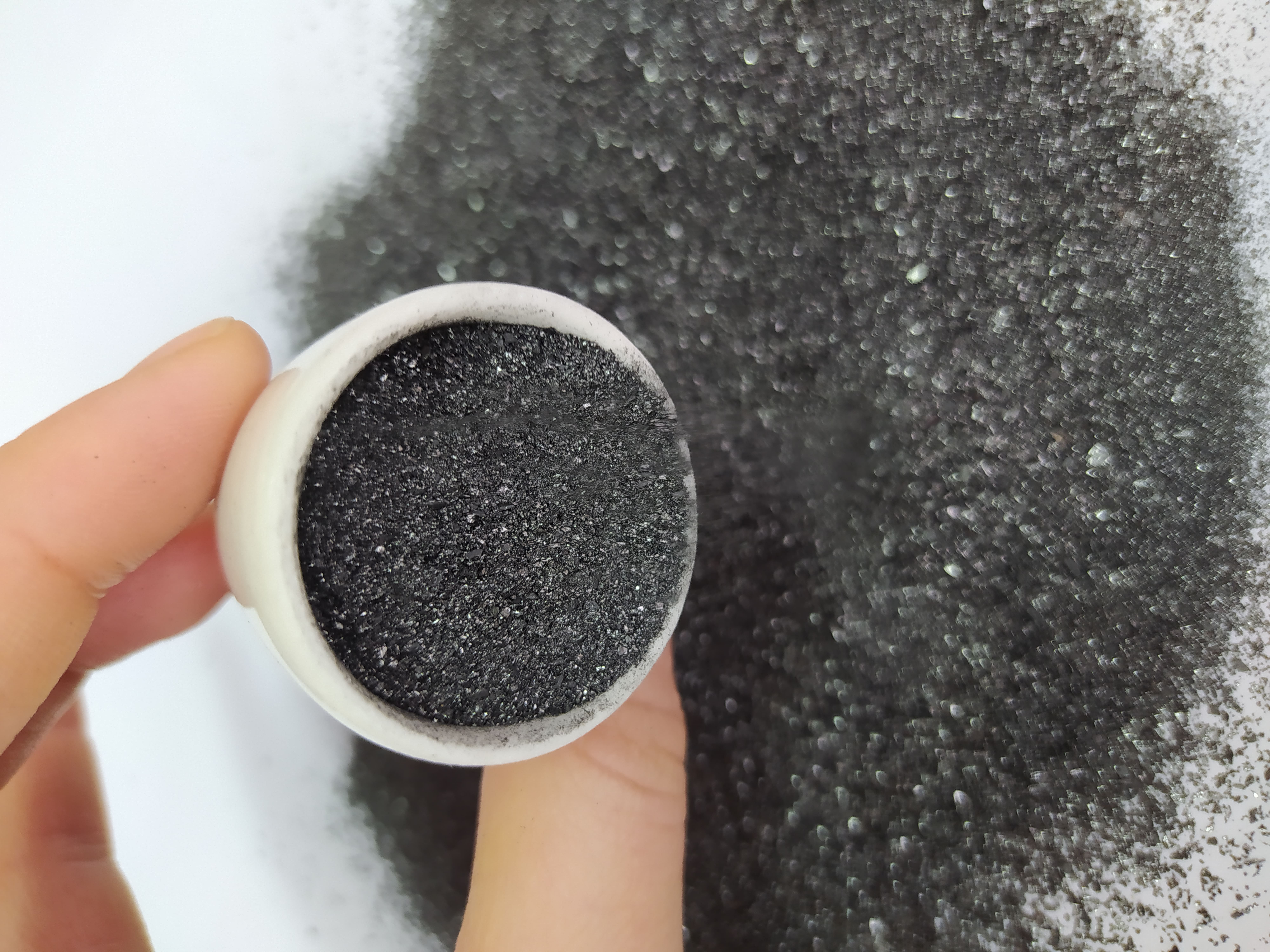

Product Specifications
| Specifications | Values |
| Form | Granules |
| Fraction, mm | 0.3 – 3 1 – 3 1 – 5 1 – 8 Another fraction |
| Color | Black |
| Moisture % | No more than 1.0 |
| Ash content % | From 3.0 to 15.0 |
| Carbon content % | From 85 to 95 |
| Sulfur content % | From 0.75 to 1.5 |
| Volatile matter % | No more than 3 |
New level production
We use only high-quality and highly enriched anthracite with a low content of sulfur and volatile matter.
We use a unique technology for the production of carbon- containing materials.
Our unique complex made moisture lower than 0,5%
To control the quality and protection of products, we carry out the following activities:
At all stages of production, from incoming control of raw materials to shipment of finished products, product quality control is carried out in our own certified laboratory for the analysis of coal quality.
Each batch is provided with a quality certificate.
Packaging of the finished product is made in polypropylene bags with a protective liner from moisture and UV radiation.
Anthracite filter media
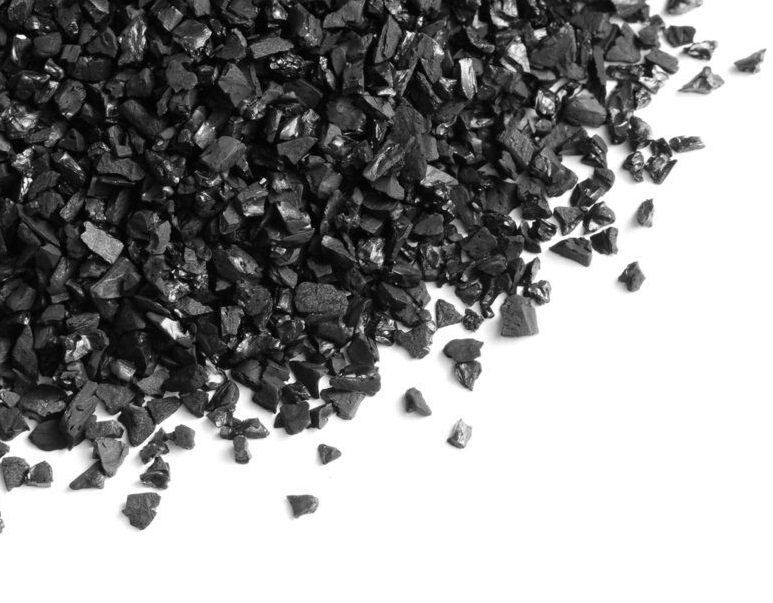
Hydroanthracite is a filter material that is produced by a special technology from high-quality enriched coal with a special structure, when crushed and fractionated,it forms a wear-resistant inert material with a developed particle surface, high intergranular porosity and abrasion resistance. Anthracite filter media are produced from low-ash and low-sulfur anthracite of the southern regions of Russia.
Hydroanthracite “Anthrafilter” is intended for filtration of drinking water, water treatment at industrial enterprises, wastewater treatment, pretreatment before reverse osmosis at the desalination station, etc
Fractions, mm 0,8-1,6 1,4 – 2,5 2,0 – 4,0 4,0 – 8,0 other fraction
Product Specifications:
Specifications of Hydroanthracite
| Carbon | Approx. 92 % |
| Ash content | 5 % Max. |
| Sulfur content | 1 % Max. |
| Volatile matter | 3.5 % Max. |
| Moisture content | 3.5 % Max. |
| Bulk density | 700 – 830 kg/m3 |
| Uniformity coefficient | 1.5 – 1.8 |
| Solubility in acids % | < 1 |
| Solubility in alkalis % | < 1 |
| Grindability % | < 4 |
| Abradability % | < 0.5 |
| Hardness | 3-4 Mohs |
Advantages of loading hydroanthracite:
Natural material of natural origin.
Increased allowable filtration rates.
Reduced backwash water consumption.
Possibility to use in combined filter loads It can be used as a bottom layer for ion.
It is not tracked during operation.
Due to the peculiarities of the granule structure, Advantages of loading
hydroanthracite exchange resins it effectively removes suspended particles.
Application of the carbon-containing materials in steel industry Steel carbonization
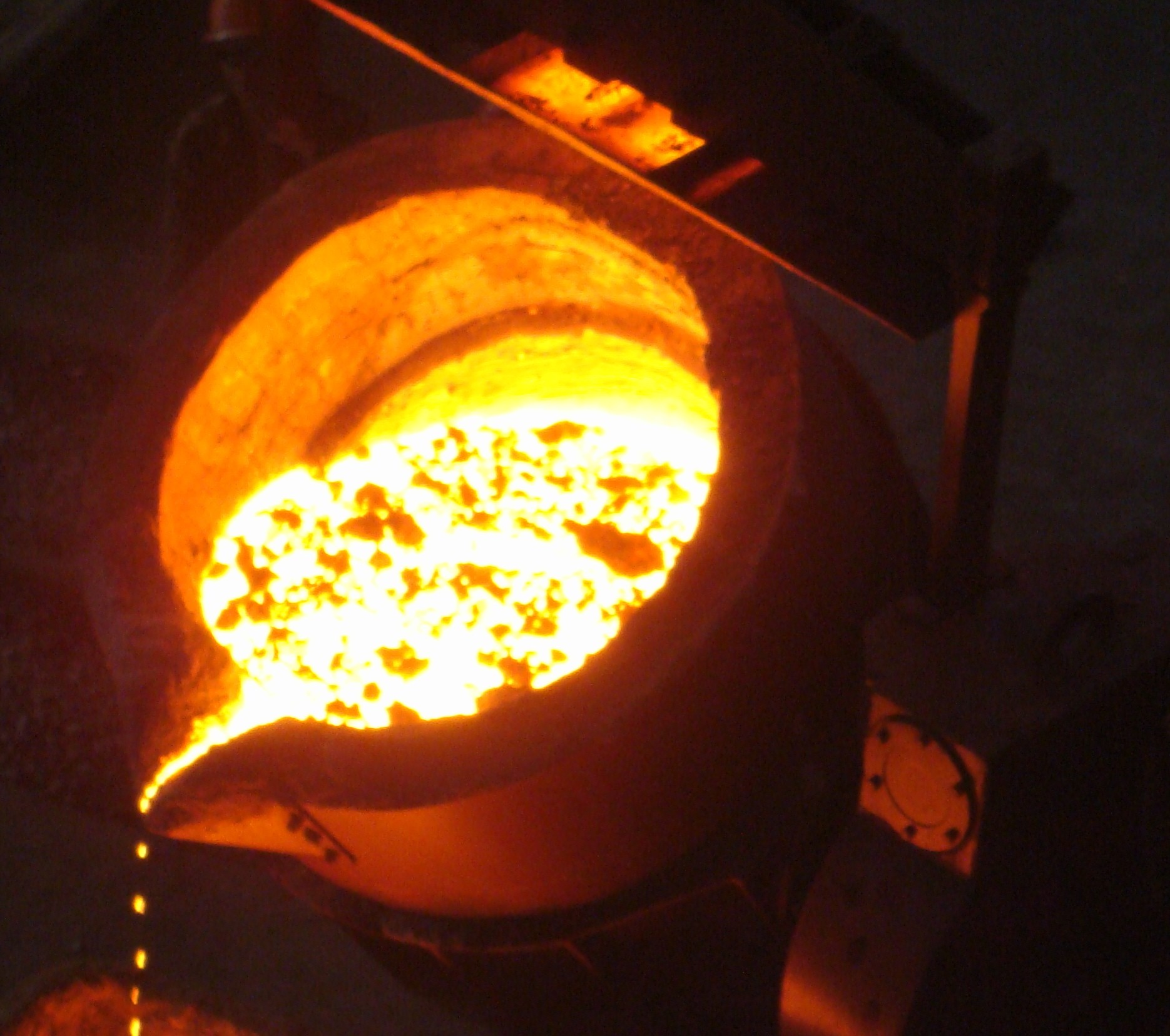
In scoop, while releasing of liquid metal from steelmaking furnace (arc-type steelmaking furnace or convector). The carbon-containing material with 0-10mm particles is added
to the scoop by the moment of releasing of liquid metal from the furnace.
In secondary refining machines (f.e. automotive ladle-furnace). There are two ways to inject the carbon-containing materials into metal: firstly, by blowing 0-3mm fraction carbon powder into liquid metal by means of inerting gas stream and immersion lance.
Secondly, by 0-10mm carbon-containing material powder addition by means of argon blow and basal tuyere.
Use of cobbed raw material for gaining temperature during steelmaking process.
Addition of cobbed coal with 20-50mm particles into melting convector allows significantly decreasing consumption of liquid iron during steelmaking process and increasing dump scrap percentage. Such replacing of iron by scrap is carried out when reduction in costs of steel production is necessary.
Putting the cobbed carbon-containing material with 25-50mm fraction into arc-type steelmaking furnace. The cobs of carbon-containing material are placed into charging basket or fed through the chute. Carbon-containing material allows giving up using solid iron in the charge and lowering the smelting energy cost.
Addition of the carbon-containing material powder when the slag is foaming.
With this object, the fine powder with 0-3mm particles and the oxygen are injected into the bath of the arc-type steelmaking furnace. Thus, the process of slag foaming begins – СО bubbles float up as a result of metal oxidation.
During the slag foaming process the hot arc is constantly covered with the foam which minimizes negative influence of arc’s emission on the cooled parts of the furnace. That provides the furnace with maximum capacity, performance, coefficient of efficiency and low power consumption at the same time.
Carbonic fillers (thermoanthracites) and deoxidizers (carbodeoxidizers).
Carbonic fillers (thermoanthracites) are used in production of coal-graphite products – electrodes, bottom and side assemblies for electrolysers, parts of blast-furnace, lining
ware, chemical industry activities.
Carbonic deoxidizers (carbodeoxidizers) are used in production of ferro-alloys, in chemical, nonferrous-metals and electrochemical industries etc.D.
CARBONIZER
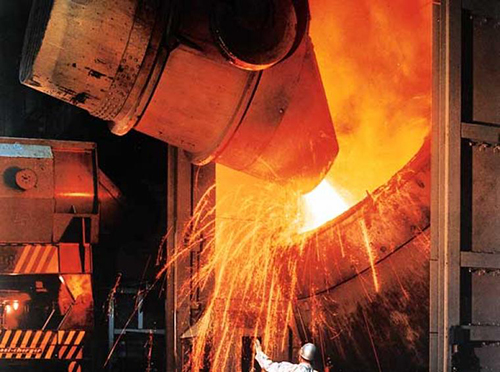
Carbonizer is a carbon containing material intended to carbonize cast iron and steel.
Carbonizer is produced at very high temperatures. Key feature of the graphite-carbonizer — extremely low nitrogen concentration.
Where to use the carbonizer?
- In manufacturing of cast iron reduced steel.
- In manufacturing of carbon steel.
- For slag foaming.
- In manufacturing of graphitized carbon materials.
- As a filler for graphite-reinforced plastic etc.
Thanks to the unique properties, the carbonizer has big potential for application in different spheres of industry. Our products are always under the close control so that they have high quality and conform to the specified properties.
SLAG FOAMING
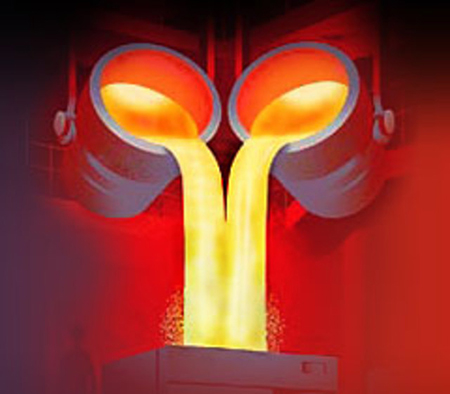
Slag foaming is carried out by simultaneous injection of oxygen and carbon-containing materials into the molten mass. As a result, gas bubbles are formed which cause sponging. Moderate slag foaming, along with the air injection in oxygen converters, has a positive impact on steelmaking process – oxygen uptake and carbon uptake are increased and stabilized; and the barriers are occurred preventing the nitrogen uptaking from the air and unwanted metal leakage from the converter.
Excessive slag foaming is unacceptable because it significantly escalates slag discharging. In some situations, even slight foaming is unwanted, because the foamed slag has low thermal conductivity which affects heat supply from the flame to the metal. That causes overheat of smelt-furnace and accelerates the wearing of lining, which takes all the undigested heat.
The excessive slag foaming can be caused by high concentration of SiO2 and Р2О5, which forms surface active anions РО43- SiO44- increas the foam longevity and stability. Another possible reason of excessive slag foaming – solid particles in the slag mass, which also strengthen physical integrity of foam bubbles (like a carcass).
To prevent the slag from excessive foaming by reason of high concentration of SiO2 and Р2О5, it is necessary to increase slag atomicity by adding into the bath the lime or fluorspar (CaF2) and alkali oxides. Elimination of small particles (the second reason) is usually conducted by increasing of molten metal temperature .
HIGH CARBON MATERIAL
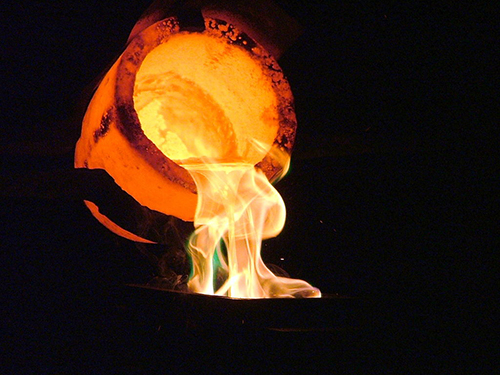
High carbon material is a solid lumpy substance with carbon concentration up to 90%. Solid granules are divided into fractions according to particles dimension. High carbon material is used in the steelmaking industry for the slag foaming.
High carbon materials are produced from coal with high concentration of carbon. The raw materials successively pass through the stages of crashing, cleaning, enrichment, high-temperature operation and drying. Then the material is sorted according to the dimension of granules and chemical constitution. The final stage — packaging and delivery.
Physico-chemical properties of output product completely meet industrial assignment and requirements of customers. Use of high carbon materials significantly lowers the power consumption and metal smelting costs and increases the product quality at the same time.
We produce high carbon material which is suitable for use in all types of steelmaking equipment. Its properties allow expanding the sphere of application beyond the steelmaking. For example, high carbon material can be used as an efficient intensifier in cement production, as a fuel part for agglomerations etc.
Packing
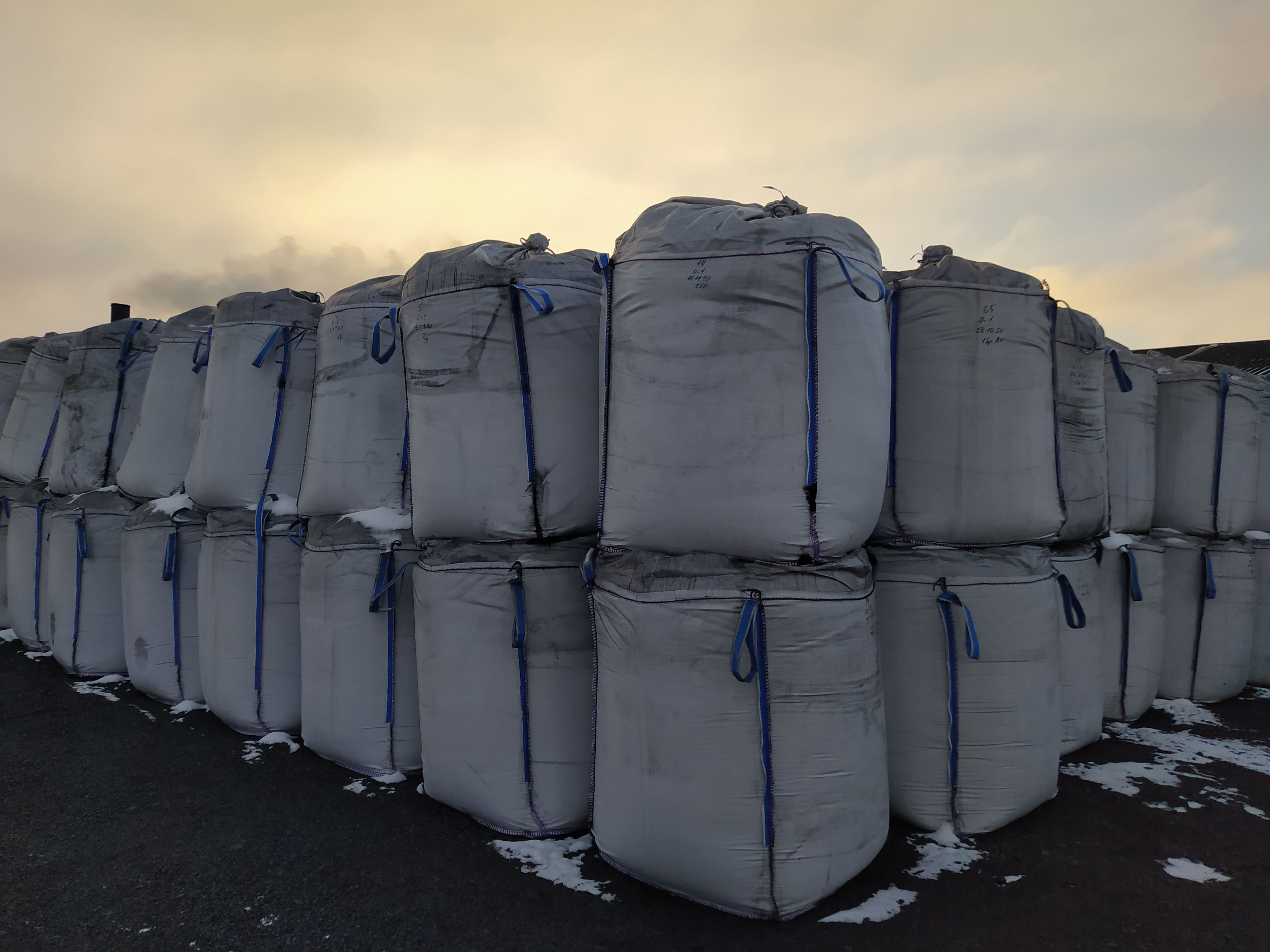
– in big bags (800 – 1200 kg),
– in paper valve bags (10 kg,25 kg, 50kg) on pallets.